Trickster’s Bouquet

There have been times when a garden
Was the thing no one dared to say.

Chaos, endurance, change and chance – 
These grow here, a trickster’s bouquet.


What can I make out of this? It’s the question of artists and anyone who doesn’t know where their next meal is coming from; the prayer of anyone whose place in society is not secure. When you have nothing, there is exactly one thing to do: make something. 

The act of making things is a dangerous discovery. Gods are defined by the act of creation. It’s not only that they can make something out of nothing; it’s that the act of creation starts to tip the world in your favor, as if you suddenly acquire more gravity. In a way, you do. You are filling up the world with your presence, your will, your vision, and your soul. The thing about souls is they don’t get weaker from being divided. They’re more like amoebas: ripping in half is an excellent path towards strength in numbers. 

Of course you can’t just make anything. Half-hearted term papers and unwanted peanut butter and jelly sandwiches won’t cut it. It has to be something you mean, something made with intent. If the rest of the world ignores it or puts up a barricade, that’s fine – as long as you make something that’s got enough depth and strength to build a world on. You will, in fact, be building a world on it: yours. So don’t make something you don’t value enough to trust with your life. 

Eventually, after enough time spent making things out of nothing, you uncover another secret. There’s a word for people who make things out of nothing. Here it is: trickster. 

When your world says you’re worthless, how do you name your own worth? Become a trickster. When there are monsters under the bed, how do you play hide-and-seek? Become a trickster. And when you look at the scales and realize they’re hopelessly stacked against you, here’s the trick: you laugh. Tricksters know that stacked scales can make an excellent catapult. 

Whether your monster is society or poverty or trauma or expectations, creation is a crucial tool with which to subvert it. Make it a caricature; turn it into a poem. Make it an abstract, and cover it up. Violate its boundaries and distort its horror into humor. When you have nothing, your world is yours to create. 


Now, what brought all this talk of tricksters out? I’ll tell you some of it. There are two culprits – both artists, both viewed with askance by their societies.

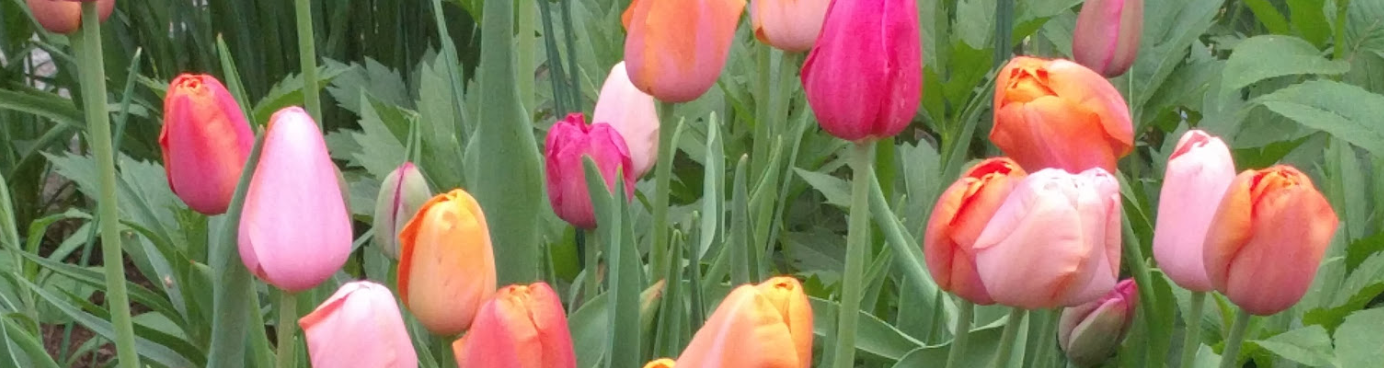
Kateryna Bilokur was a Ukrainian artist born in 1900. Her lifetime overlapped with both world wars and multiple dictatorships in a part of Europe that has always been tumultuous. The government-issued artistic aesthetic was social realism; her inspiration was flowers. Therefore she was viewed as subversive. 

But she kept painting. She made works full of such perfect color that your brain feels like singing, like the perfect harmony that comes from a resolved chord. She painted a beetroot and it glows like a treasure; her flowers fill the paper with unearthly detail that holds you mesmerized in such a way that social conformity and propaganda campaigns can’t compete. No wonder the government was afraid.

I see Bilokur’s work as a different facet of the same type of trickery put forth by the American artist Georgia O’Keefe. O’Keefe is almost comically famous in comparison – yet her outsized flowers were also viewed as subversive, worthless, audacious, and, frankly, pornographic by critics and social commentators. Like Bilokur’s work, they hold a fascination that belies their “simple” subject. It’s a glimpse at another world, a world built on the intent of tipping gravity, just a bit, towards the artist’s vision. Both artists’ work has the sort of power that comes from intent, integrity, and a belief that the power of creation will have the last laugh. 

These artists are the inspiration for the verse at the start of this post. 


For more trickery, here are some links:

Bois de Jasmin introduced me to Kateryna Bilokur’s art with this post.

View all of Kateryna Bilokur’s paintings online here.

My thoughts on tricksters, artists, and acts of creation owe much debt to Lewis Hyde and his book, Trickster Makes This World: Mischief, Myth and Art. It’s a richly enjoyable read, especially the chapters on the Winnebago Trickster Cycle. 

Oranges Or Secrets?

I can give you oranges or secrets – 
Frankly, the orange is a better pick. 
It glows like a treasure when it’s opened
But secrets only look like treasure when they’re kept.

Not A Comfortable Beast

My Emily says “Hope is the thing with feathers,”
But my rage is a thing with teeth. 
It eats the news for breakfast –
Not a comfortable beast
Nor known for good conversation. 
The neighbors stay away
But it howls the tune I’m dying to say,
Shreds the papers dictating the day,
Scores the walls

And growls, there’s work to be done. 

Would you argue? 


Two exceptional writers pointed me in the direction of these words. 

First, I owe a debt of thanks to Emily Dickinson for her poem, “Hope is the thing with feathers”. View the original here.

Second, Siri Hustvedt argues for the use of the first person possessive to claim artists’ intent in her essay “My Louise Bourgeois” (A Woman Looking At Men Looking At Women: Essays on Art, Sex, and the Mind). In her words, quoting (appropriately) Emily Dickinson: “When Emily Dickinson read about the death of George Eliot in the newspaper, she wrote the following sentence in a letter to her cousins: ‘The look of the words as they lay in the print I shall never forget. Not their face in the casket could have had the eternity to me. Now, my George Eliot.’”


Emotions are simple creatures and not to be trusted. Also, emotions are complex creatures and not to be trusted. 

Both of those are true, to the extent that neither is quite true. Truth and trust aren’t necessary for something to motivate action, though I wish it were so.

Some people, I hear, are motivated by emotions like love, compassion, and kindness. It is an understatement to say I would like to be one of them. My life would be a calmer place. As it is, I have apathy, isolation, and rage. Of the three, anger shows the most promise for getting anything done. But it is not known for its peaceful coexistence with good judgement. Therefore, the great question I face each moment is: How do I create something constructive out of this?

In myths, the act of naming something tames it. In life, the act of speaking something shapes it. My particular creature is not a comfortable beast to live with. But we know each other well. When it growls, I’ve learned to listen. When I speak, it gives me some sort of truth. And when we hear singing, we both sit still and listen to the thing with feathers.

Blame Writers, It’s Safer Than Blaming the Dragons

Dragons and writers can’t escape each other.

It’s not just that a dragon is a reliable addition to any story. It’s that writers and dragons are the same thing. They collect bits of the world*. When someone – an editor or English teacher or upstart hero – finally wrangles the mass of accumulated stuff away from them, the whole is recognizably different than the sum of its parts. With luck, it’s now classifiable as “treasure” (or “a first draft”).

In their quest, both seek unknown territory. Dragons are synonymous with those parts of the map where the cartographer gave up. Oh that’s good enough, they said: “Here be dragons.” Writers, unlike cartographers, can’t just add some colored shapes and go home**. They have to write themselves out of whatever corner they wrote themselves into – and where better to look for an unexpected plot device than the unknown? “Here be dragons” indeed. 

But the last two paragraphs are just a roundabout way to get around to the idea of treasure, and all the things treasure stands in for. I blame dragons and writers because, in my experience, they’re usually where the trouble starts. The writers make the dragons and the dragons make the treasure. The treasure ends up in children’s books, and the children perk up their ears and listen because children love dragons. 

Children love dragons for two reasons. Dragons are Cool – which is another way of saying their powerful ability to reshape the world is the stuff that every child craves – and they are indelibly linked to treasure. And children also love treasure***. 

It’s not a mercenary reaction. Children understand that treasure is not defined by market value. The idea of “treasure” becomes meaningless once you separate out the individual pieces; it’s allure comes from the aggregate, the endless juxtaposition of textures, colors, and shapes in which to immerse yourself. 

The people who write children’s books understand this, and I can prove it. Picture a treasure chest. I can tell you exactly what’s in it: a pile of gold-colored coins, loose gemstones and jewelry scattered throughout, and at least one gold chalice partially visible. There may also be a crown. The whole thing emits a vaguely gold-colored glow, like a nightlight. 

That’s the treasure chest you saw in your mind every time someone said “treasure” in a book. That’s the treasure chest in the picture books your parents read you. Writers understand that one way to ensure a rapt readership is to include a treasure. And do you want to know why treasure is such an undeniable hook?

Picture your treasure chest again. I bet you thought about finding it yourself, and I bet you thought about keeping it. Maybe you planned how your life would be different if you had that treasure: you could live in a castle, or with dinosaurs. The point is, every good treasure is made up of four parts. 

First: gold. Lots of it. Self explanatory, really. 

On to the second part: treasure is indivisible. No one pictures “a piece of” treasure. “Treasure” is always composed of things massed to the point where the individual items are subsumed into the richness of the whole. 

Third, a treasure is a thing to be wanted. That’s deceptively obvious, and I’ll return to it in a moment. 

Fourth, people want treasure because it has the power to transform a world. Once you hold treasure, you hold the power to transform the world into your world. That’s why every child wants it, why every writer wants it (dragons, remember), and why every adult wants it too. Everyone wants to shape the world in their favor.

The reason everyone wants to shape the world in their favor traces back to the third point, the one about wanting things. 

In stories, treasure is the thing everyone wants: the focus. In real life, treasure stands in for the things people want, the things they can’t quite focus on because of the life around them. Call it greed, call it desire; neither is really correct. It’s more of an urge and a compulsion, and it isn’t about an object at all. I’d say the feeling is like sugar ants under your skin****, but it’s less of a defined itch, tickle, or tingle, while having characteristics of all of those. It’s more of a diffuse-but-definite state of being. It’s a crazy frustration and sadness at all the things for which you’ll never know satisfaction, and sometimes, secretly, you don’t mind it at all. Sometimes, secretly, you know it’s the best proof you’ll ever come across that you’re alive. 

Treasure stands for the things people want. That’s obvious. But what’s not so obvious is this:  people need to want things. Specifically, people need to want unfulfillable things. Treasure is the perfect stand-in because it actually does seem fulfillable: we all have a picture in mind, a perfect treasure chest that glows like a nightlight. We’ll know it when we see it. And in the meantime, we’ll learn how wide the world is, how many places treasure could be hiding. We’ll learn how to look for things, and we’ll learn how to see both what’s in front of us and what’s a million miles away. 

Did you ever read the Calvin and Hobbes comic books? They’re for children, and they’re written by a dragon masquerading as an author named Bill Watterson. The title of one of the books is There’s Treasure Everywhere.  The trick is to know how to look without finding it. 


*Further proof: both are noted for their tendency towards grumpiness and drastic reactions to being disturbed.

**I spent the summer taking a cartography course, and this is so far from true I choked as I typed it. Writers have a far easier time of it. All they have to contend with is writers’ block and editing, whereas cartographers have to make sure stuff is actually where they say it is in case someone, you know, checks. 

*** Most children are, in fact, tiny dragons. Anyone who has met a two-year-old understands this. 

****Don’t Ask.

If You Give Me Your Words

If you give me your words I’ll make them a galaxy;
I can’t help it. I hear nebulae in your voice
And a supernova in every consonant.

And if you ask if my head is in the clouds
I’ll just smile and write it down.

Good Distractions Don’t Write Themselves

Good distractions, contrary to common opinion, don’t happen every day. No, often you have to work for weeks on end with only very bland, boring, lackluster excuses to sustain you, until one day – POW! – out of the blue, with all the dramatic fanfare of a squirrel falling down a chimney (true story, don’t ask) – there’s a prime specimen of distraction to work with. 

With care, you can get several days to a week out of a really good one. 

It’s important to nurture your distraction. The key is, don’t waste it. Don’t waste a distraction on a day you already have nothing to do. Wait to enjoy it when you have far too much to do and more on the way. 

That’s the perfect time to spread your wings, embrace your freedom from reality, and freefall straight into a gravity well of discovery.

The key is to find something that, like introspection, is endless*. You’re looking for something that other people before you have already found to be endlessly fascinating. If these people felt moved to write articles, develop blogs, or otherwise leave a trail for others to follow down the rabbit hole, you know you’ve chosen wisely. Your goal is to follow them as far and as fast as possible before the deadlines catch up to you. 

For example, a shortlist of 2019 “Best Of” distractions: from January to late April, it was Stardew Valley**. In May, it was the stock market. In August, it was home organizing, and by late August/early September, it was perfumes and pearl earrings (perfume criticism is practically its own genre of writing. Luca Turin is the Elder Statesman of the bunch if you want a book, but there are some really fantastic blogs like Bois de Jasmine). From mid-October to early December, it was learning Spanish (again). After that the sheer terror of schoolwork kept me busy until I finished classes. All in all, a very good year. 

It’s not just about the distraction, though. It’s also about what you’re distracted from. I can honestly say none of the above would have been possible without a steady stream of commitments, responsibilities, deadlines, and goals. 

And sometimes, if you manage it just right, you may even discover that what you’re running from turns into what you’re running to. 

I started this blog as a distraction from the problem of figuring out what was important enough to talk about. That’s a shortcut of an explanation, but today it will suffice. It turns out it was the wrong problem all along – and it took this particular distraction for me to realize it. It isn’t a question of figuring out “what’s important enough” to talk about. If it’s important to you, you’ll find the words. Rather: if it’s important, the words will find you. In fact, you won’t be able to stop them. They’ll come creeping into your brain and out the corners of your eyes, fill your mouth, and take over your lungs. You’ll see them lying in wait wherever you turn, and when you don’t see them you’ll know they’re plotting. 

A good distraction doesn’t make itself. It needs something looking over its shoulder; it’s defined by what’s behind it. The business of getting words on paper is similar. When you find what’s looking over your shoulder, the last thing you do is run away. Just stay still. Remember, it knows where to find you. And, like your shadow, you aren’t going anywhere without it. 


*”The problem with introspection is that it has no end.” Phillip K. Dick

**THAT. GAME. Gaming will be good for you, they said. You could use a hobby. Well, they gave me a hobby BUT I FOUND AN OBSESSION, I TELL YOU. Now if you’ll excuse me, my dinosaurs need feeding. Oh, and here’s the complete soundtrack: really good to work to. 

Squirrels

The rustling on either side could be anything –
In books it often is.
Around here it’s likely squirrels,
Ferocious, shining, and seven foot tall.

Words and Other Guests

“I don’t know the name, but I know it lies closest to your heart.”

Sometimes a phrase shows up in your brain and refuses to leave. It sits there, patiently or impatiently, and waits for you to catch on to the fact that a) it’s not leaving, and b) it means something. 

There is exactly one way that I have ever found to resolve this situation: figure out what the words mean, and write it down. Sometimes it takes a while, though. Sometimes you have to puzzle through for days, weeks, or months before enough small things add up that you can say, with complete truth, what needs to be said. 

The above phrase crept into my head quietly, one day at work. At first I thought it was a modern ghost story – some sort of meta-The Turn of the Screw, Henry James with an identity crisis thrown in. That sounds cheerful, I thought, and went back to minding my own business. 

You can guess how that turned out. 

After several days of more bits and pieces hitting me in the head, Poltergiest-style, I found enough of the lines to start to recognize the thing. Only it wasn’t one thing; it was three different posts. It turns out they’re all related by the idea of … trauma. I know, I have a cheerful brain. Here’s the thought process: 

Trauma is one of the most contagious substances in the Universe. It likes to spread from person to person through both space and time. 

Trauma isn’t always recognized by the society that creates it. 

I see many unrecognized traumas in my own society. 

People are living with and absorbing the weight of these traumas, these injustices, today; the results will travel with us into our future. 

Trauma tends to wrap around individual lives and experiences and weave them so tightly into a certain pattern of History that they can’t untangle themselves from it, even generations into the future. 

How does that turn into three different posts?

The first piece of writing (Happy Endings) deals with the idea of trauma as something that overshadows lives beyond the extent of people who directly experienced or participated in it.

The second (Today My Words Are Simple: Trick History) deals with the idea of history (or – let’s be precise – human behavior) as something that displays patterns. Sometimes people think, “Oh, that’s sad, but it’s just the way it is.” No, nothing is “just the way it is.” If you can see the pattern, you have an option to change it.

The third (Insurance Is Not A Poetic Thing) (which I’m still not completely happy with, still tinkering with) – recognizes the feeling of valuelessness resulting from everyday injustices is as much a type of trauma as the large-scale disasters with film adaptations and epic soundtracks.

Common to each of these ideas is the implied question, what is the value of a life? (Yep, the philosophy is starting to hit hard.) Part of what traumatizes people is feeling like choice is valueless, and thus life has no value. It’s a feeling of helplessness and powerlessness, a state of disconnection from options. 

There are many ways to make it clear to people that they are not, in fact, worth anything. I used to know an economist who would argue that you could know the value of a person by checking the black market. Technicalities and edginess aside, I prefer a world in which people are valued for more than their economic value – for more than the value they produce for others, and the value they give others through consumption. 

Of course, economic systems do produce a type of value, but it only works within the system of that economy. It can be very useful as long as you plan to limit the scope of your actions and understanding. But limiting your scope is dangerous when you forget you’re doing it, especially when thinking about something so crucial as the concept of “value”. So here’s a mental exercise:  let’s look at this from the field of physics.  (Because as they say, everything else is just stamp collecting*.)

Physics doesn’t recognize value. Or rather, physics understands that nothing is wasted. Even “nothing” has its place (alright, possibly most of the universe is “nothing”, if you believe those popular science articles), and the fact that nothing is wasted is the value of the whole: there are no externalities. No getting away from something. A small effect becomes large, a large system breaks down, but the sum of the whole has an integrity that denies nihilism. 

In a society, each person has a vital spot in maintaining the integrity of the whole. Cynicism, apathy, and failed definitions of value tear away at this whole. If a society doesn’t repair itself faster than it’s broken down, the end result is its individuals will experience the crippling weight of accumulated choicelessness. 

How do societies recover from this state? How do individuals deal with the understanding that their society has no use for them, that they are an inconvenience, a problem to be removed or ignored? How does one regain value?

Lucky for us, the phrase “trick history” is stuck in my head – but that’s a post for another day. 


*A quote attributed to Earnest Rutherford: “All science is either physics or stamp collecting.” https://quoteinvestigator.com/2015/05/08/stamp/


Very Important Note: do not click on xkcd while researching, even if the article you are reading references it. That said, https://xkcd.com/1520/.

You’re Invited

You’re invited.

To what? To think. To participate, to live, and to understand your whole life will never be enough. But as Neil Gaiman’s Death says, “You get what anyone gets… you get a lifetime.”

Coming from Death’s perspective – that means something.

So: I promise not to waste it. Mine or yours. We have work to do. We have brains; it’s in our species designation, Homo sapiens. We happen to be the only surviving members of our genus. If I sound a bit grim, you can’t say you weren’t warned – it’s in the name: Skeleton At The Feast. Ancient Egyptians (the original Goths, with a better eye for color) reportedly gave skeletons a place at the dinner table, with an eye towards reminding partiers of mortality. (As if the pyramids and the entire mummy-industrial complex weren’t enough. These people were thorough.) The Romans, a cheerful lot noted for their subtlety, appropriated this custom and replaced the genuine article with small silver skeleton-shaped party favors called larva convivalis. Cue the nineteenth century: hygiene was in and silver was expensive. Therefore the custom was relegated to literary motif, and used by several Romantic poets including Henry Wadsworth Longfellow (see The Old Clock On The Stairs, 1846).

Presently, it’s a phrase used to describe a grim reminder at a festive occasion.

I’ve always thought the quiet little critters had the best seat in the house, though. They get to see everything. They never make conversational faux paux. They are exempt from rules about which fork to use, and they never, ever have to worry about the morning after. They are observers, and they can be truthful because, seriously, no one is going to contradict them. And if someone does, they get the ultimate retort: a grin and a really meaningful stare.

You could say I consider them a role model.

Here’s their invitation: give your time like a gift, because it is. Give it generously to places and creatures and moments that are important. There’s work to do, and the things you think about are too important not to change for the better.


Let me do you the favor of never wasting your time.
I’ll ask for your heart, which is rather a lot upon first meeting;
I might take your breath, but it’s a fair trade.
You give me voice.
You give me the person I want to be,
The one unafraid to laugh
And be outrageous; laugh at herself
And the world.
The one who speaks her mind, all nine of them.
The one with eyes so clear her brain shines through
And her heart remembers why it keeps beating.


Referenced: https://wordhistories.net/2016/09/07/a-skeleton-at-the-feast/

Insurance Is Not A Poetic Thing

This is a ghost story, but I can’t tell you who died.
I can’t tell you their name,
But I know it lies closest to your heart.

The name of one unborn, or born too soon, or born to die;
Child, older child, adult and adult as child,
A full room with empty eyes: life costs so much.

When bone turns against you, brain and muscle warp,
Heart holds no rhythm and breath no flight –
Can one live on soul alone? Even that
Lies buried. Dollars and plans –
The best laid of mice and men –
Are such a fine dust to choke on.

Ghosts are simple creatures. They ask for peace.
Ghosts dream
Of life for those not like them.

We may yet be ghosts, each one;
We may yet seek life for those not like us.
The unborn and yet to be born, those born to live long and die.

Don’t wrap the living in a shroud
And drop a life for death emerging.
Insurance is not a poetic thing
But it gives life or death, as surely as the Universe
And a great deal smaller, though not less complex.