

The rustling on either side could be anything –
In books it often is.
Around here it’s likely squirrels,
Ferocious, shining, and seven foot tall.
Words and Other Guests
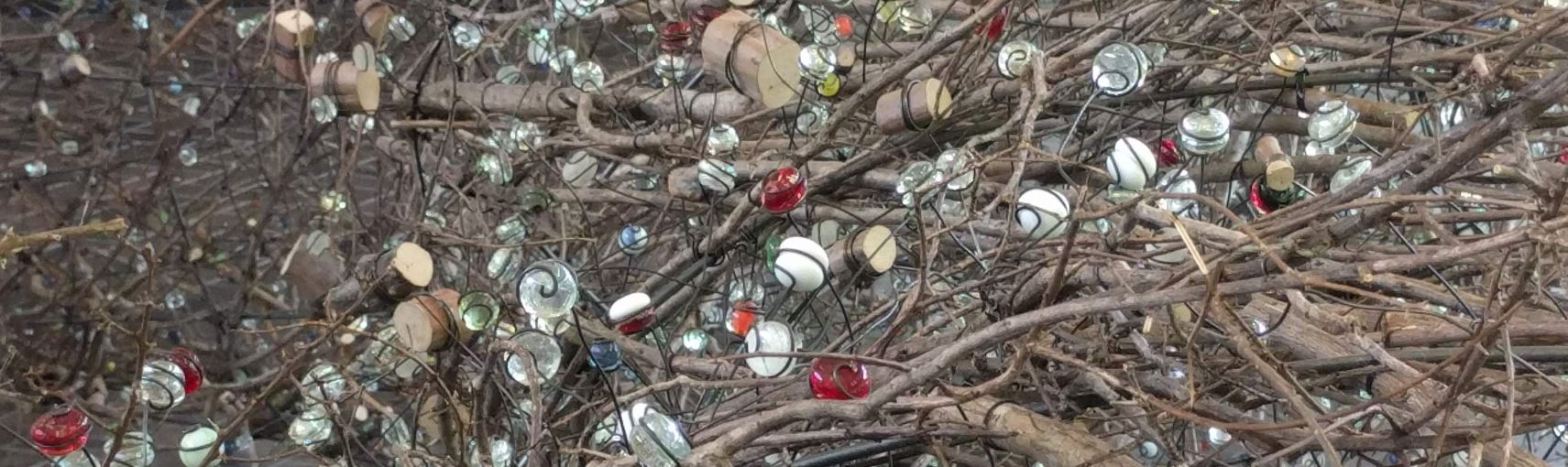
“I don’t know the name, but I know it lies closest to your heart.”
Sometimes a phrase shows up in your brain and refuses to leave. It sits there, patiently or impatiently, and waits for you to catch on to the fact that a) it’s not leaving, and b) it means something.
There is exactly one way that I have ever found to resolve this situation: figure out what the words mean, and write it down. Sometimes it takes a while, though. Sometimes you have to puzzle through for days, weeks, or months before enough small things add up that you can say, with complete truth, what needs to be said.
The above phrase crept into my head quietly, one day at work. At first I thought it was a modern ghost story – some sort of meta-The Turn of the Screw, Henry James with an identity crisis thrown in. That sounds cheerful, I thought, and went back to minding my own business.
You can guess how that turned out.
After several days of more bits and pieces hitting me in the head, Poltergiest-style, I found enough of the lines to start to recognize the thing. Only it wasn’t one thing; it was three different posts. It turns out they’re all related by the idea of … trauma. I know, I have a cheerful brain. Here’s the thought process:
Trauma is one of the most contagious substances in the Universe. It likes to spread from person to person through both space and time.
Trauma isn’t always recognized by the society that creates it.
I see many unrecognized traumas in my own society.
People are living with and absorbing the weight of these traumas, these injustices, today; the results will travel with us into our future.
Trauma tends to wrap around individual lives and experiences and weave them so tightly into a certain pattern of History that they can’t untangle themselves from it, even generations into the future.
How does that turn into three different posts?
The first piece of writing (Happy Endings) deals with the idea of trauma as something that overshadows lives beyond the extent of people who directly experienced or participated in it.
The second (Today My Words Are Simple: Trick History) deals with the idea of history (or – let’s be precise – human behavior) as something that displays patterns. Sometimes people think, “Oh, that’s sad, but it’s just the way it is.” No, nothing is “just the way it is.” If you can see the pattern, you have an option to change it.
The third (Insurance Is Not A Poetic Thing) (which I’m still not completely happy with, still tinkering with) – recognizes the feeling of valuelessness resulting from everyday injustices is as much a type of trauma as the large-scale disasters with film adaptations and epic soundtracks.
Common to each of these ideas is the implied question, what is the value of a life? (Yep, the philosophy is starting to hit hard.) Part of what traumatizes people is feeling like choice is valueless, and thus life has no value. It’s a feeling of helplessness and powerlessness, a state of disconnection from options.
There are many ways to make it clear to people that they are not, in fact, worth anything. I used to know an economist who would argue that you could know the value of a person by checking the black market. Technicalities and edginess aside, I prefer a world in which people are valued for more than their economic value – for more than the value they produce for others, and the value they give others through consumption.
Of course, economic systems do produce a type of value, but it only works within the system of that economy. It can be very useful as long as you plan to limit the scope of your actions and understanding. But limiting your scope is dangerous when you forget you’re doing it, especially when thinking about something so crucial as the concept of “value”. So here’s a mental exercise: let’s look at this from the field of physics. (Because as they say, everything else is just stamp collecting*.)
Physics doesn’t recognize value. Or rather, physics understands that nothing is wasted. Even “nothing” has its place (alright, possibly most of the universe is “nothing”, if you believe those popular science articles), and the fact that nothing is wasted is the value of the whole: there are no externalities. No getting away from something. A small effect becomes large, a large system breaks down, but the sum of the whole has an integrity that denies nihilism.
In a society, each person has a vital spot in maintaining the integrity of the whole. Cynicism, apathy, and failed definitions of value tear away at this whole. If a society doesn’t repair itself faster than it’s broken down, the end result is its individuals will experience the crippling weight of accumulated choicelessness.
How do societies recover from this state? How do individuals deal with the understanding that their society has no use for them, that they are an inconvenience, a problem to be removed or ignored? How does one regain value?
Lucky for us, the phrase “trick history” is stuck in my head – but that’s a post for another day.
*A quote attributed to Earnest Rutherford: “All science is either physics or stamp collecting.” https://quoteinvestigator.com/2015/05/08/stamp/
Very Important Note: do not click on xkcd while researching, even if the article you are reading references it. That said, https://xkcd.com/1520/.
You’re Invited

You’re invited.
To what? To think. To participate, to live, and to understand your whole life will never be enough. But as Neil Gaiman’s Death says, “You get what anyone gets… you get a lifetime.”
So: I promise not to waste it. Mine or yours. We have work to do. We have brains; it’s in our species designation, Homo sapiens. We happen to be the only surviving members of our genus. If I sound a bit grim, you can’t say you weren’t warned – it’s in the name: Skeleton At The Feast. Ancient Egyptians (the original Goths, with a better eye for color) reportedly gave skeletons a place at the dinner table, with an eye towards reminding partiers of mortality. (As if the pyramids and the entire mummy-industrial complex weren’t enough. These people were thorough.) The Romans, a cheerful lot noted for their subtlety, appropriated this custom and replaced the genuine article with small silver skeleton-shaped party favors called larva convivalis. Cue the nineteenth century: hygiene was in and silver was expensive. Therefore the custom was relegated to literary motif, and used by several Romantic poets including Henry Wadsworth Longfellow (see The Old Clock On The Stairs, 1846).
Presently, it’s a phrase used to describe a grim reminder at a festive occasion.
I’ve always thought the quiet little critters had the best seat in the house, though. They get to see everything. They never make conversational faux paux. They are exempt from rules about which fork to use, and they never, ever have to worry about the morning after. They are observers, and they can be truthful because, seriously, no one is going to contradict them. And if someone does, they get the ultimate retort: a grin and a really meaningful stare.
You could say I consider them a role model.
Here’s their invitation: give your time like a gift, because it is. Give it generously to places and creatures and moments that are important. There’s work to do, and the things you think about are too important not to change for the better.
Let me do you the favor of never wasting your time.
I’ll ask for your heart, which is rather a lot upon first meeting;
I might take your breath, but it’s a fair trade.
You give me voice.
You give me the person I want to be,
The one unafraid to laugh
And be outrageous; laugh at herself
And the world.
The one who speaks her mind, all nine of them.
The one with eyes so clear her brain shines through
And her heart remembers why it keeps beating.
Referenced: https://wordhistories.net/2016/09/07/a-skeleton-at-the-feast/
Insurance Is Not A Poetic Thing

This is a ghost story, but I can’t tell you who died.
I can’t tell you their name,
But I know it lies closest to your heart.
The name of one unborn, or born too soon, or born to die;
Child, older child, adult and adult as child,
A full room with empty eyes: life costs so much.
When bone turns against you, brain and muscle warp,
Heart holds no rhythm and breath no flight –
Can one live on soul alone? Even that
Lies buried. Dollars and plans –
The best laid of mice and men –
Are such a fine dust to choke on.
Ghosts are simple creatures. They ask for peace.
Ghosts dream
Of life for those not like them.
We may yet be ghosts, each one;
We may yet seek life for those not like us.
The unborn and yet to be born, those born to live long and die.
Don’t wrap the living in a shroud
And drop a life for death emerging.
Insurance is not a poetic thing
But it gives life or death, as surely as the Universe
And a great deal smaller, though not less complex.
Today My Words Are Simple: Trick History

I don’t know the name, but I know it lies closest to your heart.
The artery, the broken child and the shattered bird,
The name whispered in trains and cages.
I don’t know the name, because I’ve heard it before,
Read it in letters
And felt it swimming in my blood;
Swimming against the tides of tact
That could not save it.
It circles the world
And follows me; I see it in the green Midwestern twilight
So the softest summertime makes me cry.
The elegance of bone
Should not be seen through skin.
The understanding of bones’ crunch
Should not be seen in eyes that haven’t seen a decade
Haven’t seen mothers and fathers and siblings
But have seen playmates in pieces.
They stand in front of me, within me,
My past and a band upon my arm:
My past is not my own. I’ll tell you a secret:
I remember a child who looked like a boy
And her name was Stella.
Polish and a proud gaze
The eyes of one who found life and knew it
The eyes of one who tricked history.
Now she’s in black and white
But she’s also in the colors of the news:
Honduras, Yemen, drone strikes or wire,
Technology fading into intent.
Today, my words are simple.
Trick history into giving her life.
Happy Endings

I’ll tell you a secret about happy endings.
Anyone who survives is, in some way, lost to what they survived.
They become composite,
A bloodline of those who still wait for survival.
As long as their lineage,
Their children feel shadows of their parents’ time
Their parents’ beloved whose life turns to grass each spring.
Borges’ Books
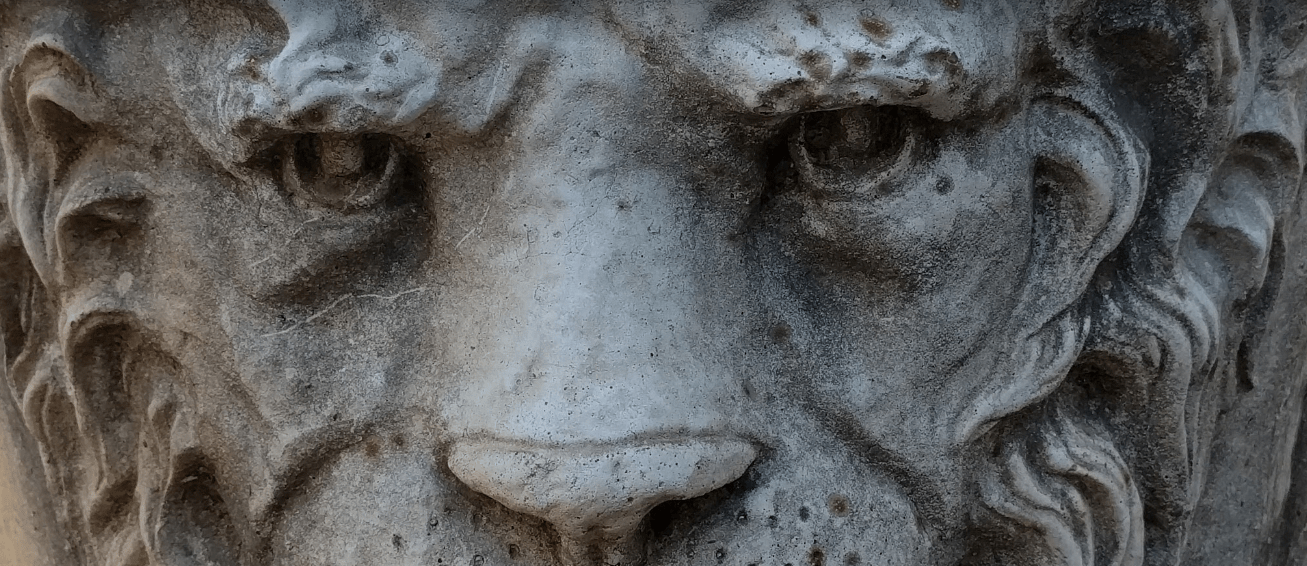
Jorge Luis Borges’ writings are known for several reoccurring themes. One of the most distinctive is his matter-of-fact allusions to fictitious books – or perhaps, books that exist only in his mind.
See Labyrinths: Selected Stories & Other Writings.
Jorge Luis Borges is unique, in my mind, as the author of the most compelling books never written. These unreachable, unknowable books – they are always there, at the corner of my vision, the back of my thoughts, the edges of a memory as I search for what or where I’ve read. They have, undeniably, an existence. Yet they have none of the fallibility of the written word: fire and flood can’t destroy them, the critic’s tongue can’t rend them, they are never forgotten on a shelf or at a bus stop or in a waiting room. They are potentially perfect. Instead they fill up the spaces between our fully formed thoughts and memories and that itching, compelling, dreamlike sensation that drives us to search for – to remember – words we never learned.
The urge to remember is, perhaps, the most obvious of these volumes’ seductions. Most people go through life trying to remember things. The more elusive the memory and the more tenuous the tracks, the more emotion its lack elicits. Worst of all is the uneasy sense that we have forgotten something, but can’t remember what – a memory of a memory. This negative space could be anything, and so over time we may fill it with the things we want the most – space, love, time, home, adventure, praise, power, knowledge. In fact, most of the truly important thought occurs as people try to negotiate the negative spaces in their mind. The heart of both philosophy and theology is found in this sensation of not-knowing.
I envy Borges’ books in this – to hold the power to reach into another’s heart and make that person aware of desire. These unknown volumes hold desire in its truest sense: unfulfilled (satiation is a different creature altogether), amorphous, and with an edge which defies self-preservation. The edge is the thing; you look over it and feel a familiar rush, the affirmation of life that comes, most reliably, from contemplating oblivion. Borges’ unwritten books are both the rush and the edge, life and its absence, the space you may fill with understanding: world without end.
Such lack of precision is almost impossible to carry off as a writer. As a reader, it’s as if someone gave you a box filled with Universe: utterly rare, strange, unknowable, and quite possibly a Pandora’s box, both unopenable and unclosable. Such possibility can only result from lack of precision. And yet, as with most boxes, the trick is in the frame: the image of the written word, a book, a precise image which Borges usually alludes to as a carefully-referenced detail within a larger whole. The book is the labyrinth in his perfectly-described garden of prose, the one detail left to chance.
My love for Borges springs from this: that he understands how great a delusion precision is. It offers the false promise of every sensation nailed into place, yet neither writer nor reader understand what they lose in its service until all alternate possibilities vanish. Precision is the enemy of possibility. Yet both are necessary. Writing and reading both rely on the yin-yang motion between precision and its negative space of forgetting, remembering, and dreaming.
Precision is a place to start – terra firma, the one place you can’t stay if there is to be any story at all. By crafting a space within precision for possibility to abide – by starting with precision and striving towards possibility – writer and reader become partners in understanding: to remember the things they might forget, to remember the things they didn’t know, and to dream to fill pages never written.
I Dislike Telling Stories
I dislike telling stories. People always say, start at the beginning, and I get lost looking for it. Stories don’t really have beginnings; they’re more like cats. They like to wander in and out as they please, and you’re left picking up small furry corpses and thankful they didn’t bring in a live raccoon this time. As for endings – most people have a pretty good sense of where stories should end. The problem is, they end – and then they continue. It’s like the drive-through scene in Dude, Where’s My Car: “And then? And theeeeen? AND THEN?”.
I think of stories more like moments of small revelation, piling up. When enough of them accumulate, the mystery or displacement or unease driving your interest in the whole thing collapses like a house of cards into a (hopefully) satisfying sense of resolution…until the accumulation begins again. Call it the Snowdrift Theory of stories.
The trick with revelations and resolutions is they are incredibly subjective. Monsieur Poirot closing a case is, realistically speaking, the middle of five or six other narratives that have likely been going on since about the middle of Dame Agatha’s novel. (Some of my most enjoyed early reading material was Agatha Christie’s murder mysteries. One of my earliest life lessons: Blackmail Never Pays.) One can imagine characters coming home for dinner, chatting over mid-century modern and martinis – “Oh darling, you’ll never guess what I heard today. It was the stepson all along!” – and then getting back to the all-consuming business of their own storyline.
So: every story is just a point of view. Call it the Point of View Theory of stories.
It’s also hard to pinpoint stories because, once you know people for a while, you just hear snippets of their life, fading in and out like a radio station.
For example. For most of my life, I thought I knew a story in full. A boy grew to the age of 14, ran away, Did Drugs, Became An Alcoholic, Was Saved, married, and lived happily ever after as a carpenter in the mountains of New Hampshire. It was a pretty good story.
After he lived happily ever after, his wife started hearing voices telling her to divorce him. They were separated for a while and then she came back. They lived happily ever after, again. They restored an antique barn.
After they lived happily ever after, again, he learned he had Hepatitis C.
His wife said she didn’t have time to take him for blood transfusions.
He got sicker and sicker.
His wife, a very loud person, talked about praise and martyrs.
Sometime in the winter, he died. His family didn’t find out until after he’d been cremated. It felt like he just got lost somewhere in the winter and never came out to springtime.
The last part isn’t completely true, because it isn’t true to him; that’s not how he would tell it nor want it told. But it’s true to the pain of loss, like dark water under ice, in the silence of wintertime woods. And even that isn’t an ending, because it doesn’t explain how the dark water and the silence now runs through other lives, changing them in small everyday ways.
Words are different from stories, because words don’t try to give an ending. The purpose of some words is just to help you find a way through. When you’re walking through dark woods, you don’t look to the right or to the left; you look at the path, because if you look away you might lose it. It’s also a bad idea to think too much about where the path goes, either in hope or fear.
From the Point of View Theory, I work with words, rather than stories. I work with words, at the end of stories, outside and around the stories I see, a framework of understanding and a misguided attempt at benediction. I try, over and over, to make some sort of path through the confusion and mess and fear. Faith, hope, and love may abide, but in order to “abide” I have to understand where I am – in the thick of it.
From the Snowdrift Theory, the cards come together to say something like: I may not see a beginning, and I certainly won’t see an end. Lives and events happen around me, some of which I may be aware of and some of which are beyond my understanding. I try to make a neat framework of understanding, but the system is greater than the system.
Pay attention to what is in front of you. You may not see it again. Seek to craft a way through that is better than what is on either side, for anyone who may follow behind you.
Like most stories, this has no true end. But I’ll leave it here. I may wander into it again, like a cat wandering into a kitchen. Or sometime in the future I may again happen on my own tracks, leading into stories for which I can find no beginning or end.
Liquid Sun
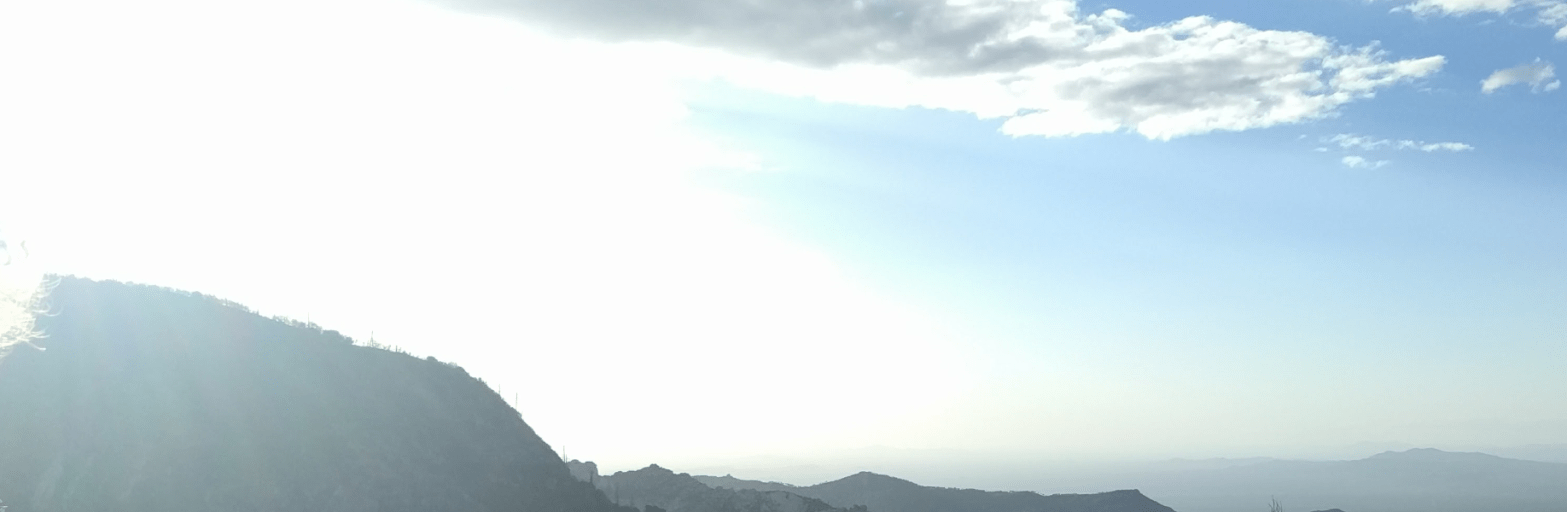
I miss the summertime of liquid sun
green watermelon grass, growth unchecked
an afternoon of sudden shade
…
I want a blue
so deep and rich your mind goes missing
your eyes swim down and down
forgetting the way to up
where sky awaits
The Fine Art of Oracular Precision: A Handout
I’m reading Superforecasting: The Art & Science of Prediction (Philip E. Tetlock). Yes, I feel like an oracle-in-training every time I say it.
This book has a lot to offer, and a casual reading would unjustly reduce it to the usual one-dimensional bestseller-fluff. At exactly 27% of the way through (according to my library’s app), there’s a 93% chance I won’t finish it in the next 1 day 22 hours before it reverts to its cyber-shelf, en route to the next reader who has it on hold. I’ve already re-requested it.
I haven’t reached the stuff that turns me into the Oracle (Matrix or Delphi). But I’ve reached an excellent, if brief, discussion on the use of precise language and the translation between quantitative and qualitative communication. My inner Teaching Assistant wants to print it off and hand it out to any undergraduate student I see.
You lucky reader, you.
To summarize: Sherman Kent had a PhD in history, and a history at Yale University. In 1941 he left academia for the agency that would eventually become the CIA. He retired from the CIA in 1967, after shaping the field of intelligence analysis through some of the U.S.’s most textbook-worthy Cold War history.
As someone whose job involved estimating likelihood of the sort of events that could lead to nuclear holocaust, he recognized that he and his colleagues could write a report, agree on the language, and put it in the hands of decision-making officials without ever pinning down exactly how certain they were of their best guesses of likelihood. To address this, he agitated for the use of quantitative definitions of certainty, and produced a table detailing the numerical definition of commonly used qualitative phrases.
Certainty According to Sherman Kent:
| CERTAINTY | THE GENERAL AREA OF POSSIBILITY |
| 100% | Certain |
| 93% (give or take about 6%) | Almost certain |
| 75% (give or take about 12%) | Probable |
| 50% (give or take about 10%) | Chances about even |
| 30% (give or take about 10%) | Probably not |
| 7% (give or take about 5%) | Almost certainly not |
| 0% | Impossible |
(Source note: The title is mine, the table is reproduced as found in Chapter 3 of Philip E. Tetlock’s Superforecasting. Tetlock cites Sherman Kent and the Profession of Intelligence Analysts, Center for the Study of Intelligence, Central Intelligence Agency, November 2002, p. 55.)
I’ve been collecting notes on the idea of “truth” as applied to writers. Sooner or later it will come spilling out in a post, but for now Mr. Kent’s table will have to stand on its own. Now if you’ll excuse me, I have 83% of a book to finish in the next 1 day 21 hours 32 minutes.
As always, I’d love to hear your thoughts! Be sure to share the exact percentage of certainty you have regarding how helpful the above is.
Marushka
 Skeleton At The Feast