Silver Towards Salt

“That liquefaction of her clothes” – 
They must have seen her eyes, 
Wide plains and oxbows, 
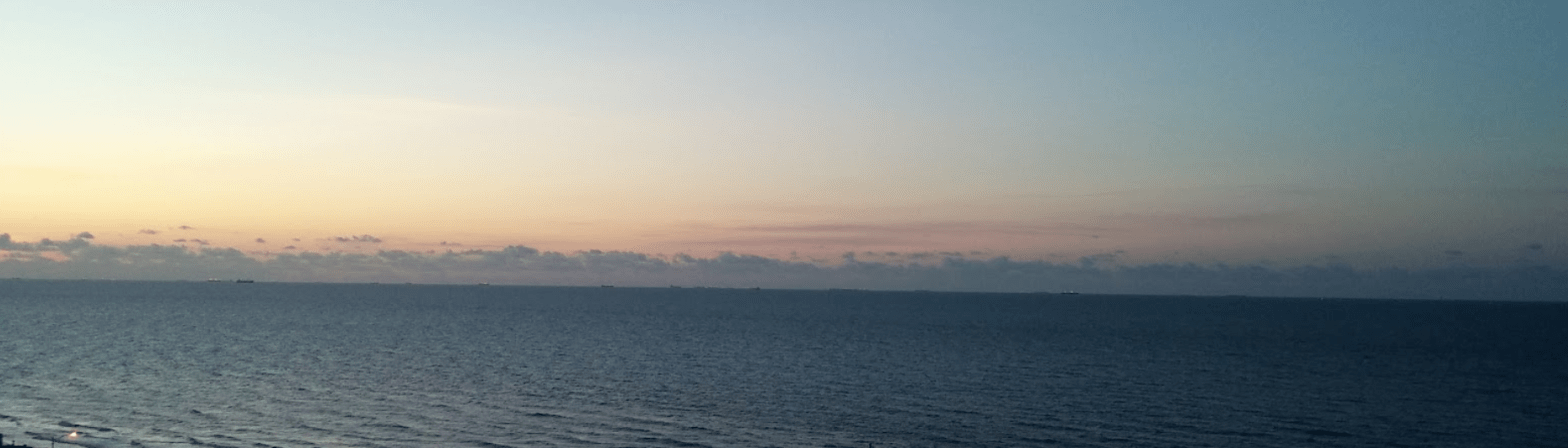
Silver dawnlight glow 
As the heart of a continent pours towards salt. 

Mineral mine, jewels that adorn
The calcification of shells –
Did they see her in the deep river cliffs,
The soundings off a shoreline ever-changing? 

They saw her when she rose – 
“Then, then (methinks) how sweetly flows- ” 

Heart given forth its life to salt. 


Quotes drawn from Robert Herrick’s poem “Upon Julia’s Clothes.”


Bug-Out Books

” ‘Walk carefully. Guard your health. If anything should happen to Harris, you are the Book of Ecclesiastes. See how important you’ve become in the last minute!’ ”

Ray Bradbury, Fahrenheit 451

What books do you hold?

If Fahrenheit 451 became real, what words would refuse to die? What pages would haunt your brain, what authors would take on your breath as their own? 

We each have our stash, our literary bug-out bag. I confess I am no help to the broader movement. Fragments are all I hold. “The night Max wore his wolf suit...”; “Because I could not stop for Death;” “I don’t know half of you half as well as I should like…” 

What if these words were cut off from the root-stock of their written form? If sometime after an apocalypse you are coaxing a restless child with a story, and memory prompts you to say –

In a hole in the ground there lived a hobbit –

How on earth do you continue when Tolkien isn’t on the shelf? 


Not a nasty, dark, wet hole; nor yet a dry sandy hole. A beautiful hole, with a round green door and a yellow brass door knob, right in the center. And the hobbit was sitting outside his door-hole, enjoying a beautiful morning and a beautiful pipe – his two favorite things in the world – when along came – a wizard! But this hobbit didn’t yet know it was a wizard. In fact, there were quite a lot of things this hobbit didn’t know – yet! 


(I clearly have no experience with either children’s attention span or oral literature – which is to say, my apologies, Mr. Tolkien, for the rough paraphrase. There’s a reason people still read The Hobbit rather than retell it from scratch.) 


But back to Fahrenheit 451. Of all the questions that book raises, one holds my mind. I’ve always wondered, secretly, how the books were changed by their human hosts. 

I know I don’t remember things without changing them. As example, consider a snatch of verse I picked up as a child. My memory says: “…I went down to the depths of mountains, the earth with her bars was about me forever.” A strong image, dramatic and visceral. Even without context, you can feel the pull of a story waiting to take over. 

Except now I can’t find any translation that uses “depths.” Perhaps I was already developing an interest in editing; in my opinion, none of the other available translations1 have the same power, the same draw, nor the physical sense of immensity conveyed by use of the word “depths.” Nonetheless, it is not true to any of the originals. 

So already, my library for a new world is flawed or changed. But is this the [t]error it seems?

The written word imposes a kind of stasis. It is labored over, refined, perfected: that is one story of its existence. 

Other versions of that story may have different truths to share. The written word may be a hybrid, a creature sterile and solitary in its never-again nature. The written word may be a vision unto its time. It may be a reflection of the mind that made it, a reflection of the ones who read it, a refraction of all the words before and after which pour into it, hourglass-like. 

It may be, simply, The Word. Any which way you write it, speak it, know it or say it, it breathes something that can’t be contained. It always seeks to escape and reshape. It burns away boundaries and fans the flames. 

And if it isn’t some pseudo-mythical or quasi-mystical beast, then it emerges from human minds – and minds change. Even as the words stay the same, our understanding of them is a moving target; just look at The Adventures of Huckleberry Finn, Othello, or any religious text you care to mention. 

I do not want books to burn. I love my library, and I love the minds I will never know nor fathom. But I also sacrifice words daily, in the conflagration of my limited understanding and pressing necessity. So search for the words that are brave enough to survive, and inevitable enough to re-emerge no matter what. 

I ask again: what books do you hold? Search for them, face them, don’t forget. And don’t forget, also, an act of survival: look beyond memory. Don’t be surprised if the words re-emerge in a way that changes you, changes them, and forever re-shapes the world in their wake.


Seriously, share what books you hold. Also, reader points awarded for those who can pinpoint the quotes.


1 Jonah 2:6, King James Version: “I went down to the bottoms of the mountains; the earth with her bars was about me for ever; yet hast thou brought up my life from corruption, oh Lord my God.” Other translations seem to use “roots,” “bases,” or “cuttings.”


Pass The Peas & Honey

Today I woke up with something on my mind. Something so pressing, engrossing, and all-around all-consuming…that I’m going to share it with you. (If you just said, quietly, “oh dear” and started backing away from your screen of choice, your instincts are wise.) 

You see, I’ve been thinking about the ingredients of great stories, great poetry, and great writing. 

“Story” is the universal constant, the cold fusion that powers poetry, writing, arts, philosophy, religion, psychology – the better parts of civilization or a sophomore-year liberal arts education. It is the hum that keeps the lights on for all attempts at poetry and writing.

Poetry is, in simplest form, a story given form you can’t forget. It’s rhythm and blues, balance and tempest, rock and roll with the brakes off. From “Do not go gently into that good night” to “Tiger, tiger, burning bright!” – poetry hides in human love for pattern and the things we can’t ignore. 

Writing tries to do a bit more than simply be unforgettable. It tries to say something while saying something – either the same thing twice, in which case it is direct, or two things with one set of words, in which case it is allegory. Either of these goals require clear thinking and wits: when you can’t run in through rhythm’s back door, you have to work doubly hard to get inside readers’ brains. 

Both writing and poetry succeed best when their link to the underlying story is strong and clear. To complete the cycle, what does story thrive on? Two key elements: pattern recognition – and surprise. 

The strongest stories are self-aware enough to build their surprises off of their patterns, so each reinforces the other. These stories start with surprise (aka intrigue – mystery), build with unusual observations (gathering questions) and end, satisfyingly, with an even greater surprise: the proverbial sting in the tail, or tale. 

By way of illustration I present to you the progenitor of this extended meditation, the words that woke me:

I eat my peas with honey;
I’ve done it all my life.
It makes the peas taste funny,
But it keeps them on the knife.

Anonymous (that most fertile of geniuses)

A thought-provoking work, and one I consider a pocket masterpiece. First of all, it’s unforgettable. As I said, I woke up with it on my mind; I recalled it without even trying, from a half-asleep state. Second – it is a brilliant example of pacing. Let me elaborate.

The piece has us hooked from its opening line: “I eat my peas with honey…” – you do WHAT? The reader progresses through a nuanced emotional response, beginning with outrage and proceeding towards a morbid interest to see what emerges from this grotesque revelation, this bizarre stage that has been set against common sense, good taste, and social mores. The next two lines continue to raise the emotional and intellectual stakes. 

In the second line – “I’ve done it all my life” – we gain a sense of timing. The opening action is placed into context, both temporally and societally. The norms of the world of the text are clearly volatile, but the fact that the unnamed protagonist sees fit to mention their pea-eating habits tells us that these habits are still considered abnormal. The fact that they’ve done so all their life paints the action less as one of deviancy than of lifelong dependency, possibly even an obsessive or addictive behaviorism. 

The third line secures our sympathy and builds urgency by provoking additional questions. “It makes the peas taste funny.” – Despite the adverse effects, the unnamed protagonist persists in their atypical behavior. Why? What drives their actions? Why has no one intervened? Is there a price? 

The final line arguably delays the cut, the final climax, until the very last word: “But it keeps them [the peas] on the knife.” (Emphasis mine.) 

This is the answer we wish we didn’t have. Though it neatly wraps up an explanation of the initial question – why eat peas with honey? – it does so at the price of an even greater question: Why would you eat peas with a knife? 

This, then, is the piece’s true mastery: it offers no author-provided denouement. It offers no false comfort. 

The reader is dropped off a cliff with the final revelation, left to process and untangle their reaction on their own. Think for yourself, seems to be the message. Only through complete disorientation, complete disengagement from societal standards, can a sense of deep individual meaning be achieved. Does that meaning itself have meaning? Who knows? Existential contemplation battles with absurdism, and the resulting (intentional) lack of stylistic resolution echoes narrative questions – solidifying this piece as a powerful antidote to existential complacency. 


Like I said – if you started backing away from your screen of choice, your instincts were sound. For those of you who stayed, I hope your understanding of what makes a good story has forever been changed. And the next time you ask for the honey right after saying “Please pass the peas” – remember, if the peas taste funny, at least the story is unforgettable. 


Pro tip – molasses is a great vegan alternative to honey. The more you know, right? 


Losing Time

Everyone has at least one thing that makes them irrational. My irrationality is losing time; when I feel others have stolen it from me, particularly the time I have worked hard to carve out. If I’ve gotten up early, ignored the dishes, laundry, breakfast, the thousand and one ways to lose a morning – dove off the dawn’s deep end into the page –  it is with the deepest of rage I am pulled back to the surface, tangled in interruption. 

Creativity can solve a lot of problems. I have yet to solve the problem of other humans. Queries about my morning, the weather, what I am working on, tasks and questions – this is the perfect recipe for a slow burn leading to volcanic temper. In my more empathetic moments I am not proud of this. I understand that the price of companionship is giving away time. In most of my other moments, I don’t care, as long as I am left alone. 

Once a piece of writing is gone – stolen by things that fill time but leave no record – there’s very little I can do to get it back. I know what the piece should have been. When I struggle through trying to force it back onto the page, it almost never works. I am not yet a good enough writer to grasp at what should have been. I am a writer who can hardly trust myself to write. 

These days there’s a new part of my brain. It says: nothing is as important as getting the words on paper. Rush to give them form. They have a split-second chance to emerge into this world. Once that chance is gone, only the stillborn corpses are left. 

From the viewpoint of creation, distraction is an unnecessary act of violence. The perpetrators don’t know and don’t care. Is it any wonder I feel the worst mix of grief, despair, and destructive rage?

Take away the created, and you’re left with the void. Take away the act of creation, and you’re left with the act of destruction. Hinduism elegantly wraps this truth around the god Shiva’s dance, but human reality is a far more tenuous, ridiculous spectacle. 

I create to keep destruction at bay. I trick myself out of grief and despair, that dark tide that wells up through cracks in my brain on a daily basis; I create to trick myself into a world full of faith, potential, beauty, the trick of humanity at its best.

Unfortunately the present price seems to be avoiding humanity at its usual. Perhaps one day I’ll learn a new trick: the trick of moderation. I’ll understand the trick of giving time freely, being generous with the present and easy towards the future. No more panicked press to capture what slips through the cracks. 

Until then, take this rage from me. I can bear the grief of lost words if it means not hurting another, words unsaid and well-forgotten. It is the price of being alive, the priceless price of existing in a world full of change and endless chance.


Pumpkins & Macbeth

The last of the pumpkins
wait for curry or rot. Either way,
Earthy taste or compost: 
I check them daily in this hot weather.

Their orange and green has evaded black,
Their vine-twisted memory of Halloween glow has sustained. 
Tomorrow, puree and steam or boil and bubble, 
Autumn warms spring against charms of powerful trouble.

Writer’s Concentration

Of course I’m writing. What else would it be?
No need to answer, please. 
Though my cup may be empty, my head is full
This page is empty – but you can’t say its dull
Or lacks direction. It’s everywhere at once –
Raw inspiration. If distilled by the ounce
It’d sell; but not so well as that other great temptation,
Pure Distillate of Writer’s Concentration.


Get it while you can, folks! Side effects guaranteed.

Why So Serious, Quote Unquote

“Why so serious?” – Indeed. 
We have no need
For a solemn face;
Hard truths have better taste
When Humor does the dishing.


The Time Heist

It’s a strange thing to be glad of a pickpocket, glad of a heist. I mean, of course, when you are the victim and not the perpetrator; when you willingly step up to play the fool at the carnival, or the innocent in the den of thieves. I myself wandered into such a scenario last night. In case you wondered, I lived to tell the tale.

Early yesterday evening there was no indication of the unusual events which were to occur. As reported in a non-existent local paper:

“The heist occurred between the hours of 11:30 p.m., April 14th, and 7:41 a.m., April 15th. Within this roughly eight-hour span, the victim completely lost a sense of time-related urgency and succumbed to the well-known hallucinatory effects of the game Stardew Valley, which – sources say – has recently received an update. Although the victim had previously logged several hundred hours with the game, this was the victim’s first time playing the game with the update. Authorities are investigating.”

The Imaginary Times

Yes, that was me. I stayed up all night, and I am happy to report I made it to Level 10 Fishing. I’ve never been so glad to lose my life. Well, a part of it. I suppose I lost eight hours, but it was a fair trade. Contrast this against the usual urge to flit, hummingbird-style (minus savoir faire and irate chirping) from project to project every few seconds. 

It’s been quite a while since I’ve experienced that strange sensation of time slipping away with absolutely no sense of urgency. “Take your time,” said no one ever. “Go on – take it. It’s free!” 

Imagine – a time-buffet. The price of entry is being born. What a strange concept: quite flawed, demonstrably untrue in practice, yet a seductively exotic luxury of which to snitch glimpses. I could argue that a lot of the more popular vices share this common motif: they alter the perception of time towards something that works for, rather than against, our delight. 

Laura Vanderkam writes about this sensation of enriched time in her book Off the Clock, and argues that it can be cultivated in one’s life. It’s one thing to read about in the tidily law-abiding confines of a self-help book. It’s another thing to apply that advice in one’s own life. 

But what if you are interested in more than a personal stash? What if you wish to – as it were – corner the market on high-quality enriched time? The cultivation of this illicit substance is the business of writers and other creation-workers. 

To put it bluntly, it is our business to hold up our readers (viewers, users, customers, etc.) and say: “Your attention and your life.” And if we’ve done our job well, they’ll say – just for a moment – “Why, certainly.” 

We are faced with the question of how to steal time and give back fulfillment. It almost sounds like a virtuous act when I phrase it that way – practically a public service. 

But although many of us like to talk about truth, we aren’t completely honest. We don’t mirror life precisely; rather, we reflect back an abundance of the things usually trapped in time’s bottleneck. Love, action, wisdom, good fortune, and their inverses as well: they’re judiciously harvested, distilled, and bottled for consumption at leisure. The mix is intoxicating precisely because these experiences are so rarely available when people have the time to savor them. 

If we’ve done our job well, the product of our efforts offers something that sidesteps time’s demands. It offers our targets – ah, readers – the chance to experience their humanity free from time’s constraints, for a moment or an hour or an evening. 

Later, when they check their pockets and find themselves short on time, they’ll find in its stead a receipt. It reads:

“Life is held only partly in the moments it is lived. The price for expanding it is the time you didn’t think you had. Memory, contemplation, introspection, understanding: all these take place beyond time’s concern. You’re welcome – and please come again.”


Please note the header image is a screenshot of the Stardew Valley opening screen. I do not claim any rights to any part of Stardew Valley or its creator, Eric Barone. However, if you are looking for an excellent way to lose time, I dearly love that game and highly recommend it.


Peach Tree Seasons

Peach tree seasons, time run soft
And swell in hours of sun –
Unseen to shy green,
Velvet to blush-green,
An ever-asking question
Of ripening fruit. 


I love discovering fruit trees. They always take me by surprise; a tree that was just a tree, until it started to grow fruit. A small part of me can never quite believe the miracle.

Earlier this spring, on my walk to my second job I would pass a fenced-in yard with a few trees poking over the fence. One day I noticed small green marbles all over a previously-unremarkable tree – peaches! Or some sort of stone fruit. Each week they grew a bit more, a very old story. I developed the habit of marking time by the peaches’ growth.

I haven’t walked that way since mid-March, when the workplace closed for shelter-in-place.

Related: Peach Tree Memory

If a thousand and one terrors that seem to befall fruit trees haven’t gotten them yet – those peaches are still growing. I like to think they’re getting up to all sorts of trouble in my absence. Perhaps later today I’ll walk that way to find out. In the meantime, I have my peach-flavored tea to enjoy, and dreams of peaches changing sunshine into sugar.

Today is Earth Day, They Say

Today is Earth Day, they say? – 
World in a day. 

I don’t understand; never mind the world. Even the word doesn’t stay 
contained. Earth: close your eyes.

Deep brown secrets, flaming stone. Blue of a planet framed
In void – clouds, monsoon, cycles and sex: miracle and molecule aligned,
Combined.   

Darkness on a moon, phosphorescence on the tides.
Shoals, eggs, turning, and time for the long-drawn question of life – 

Celebrate? Propagate. 
Chlorophyll, single-cell, vertebrate: 
This honor is fractal, yet means one thing.

Let the words of my mouth and the meditations of my heart
Not destroy what my mind can’t comprehend.