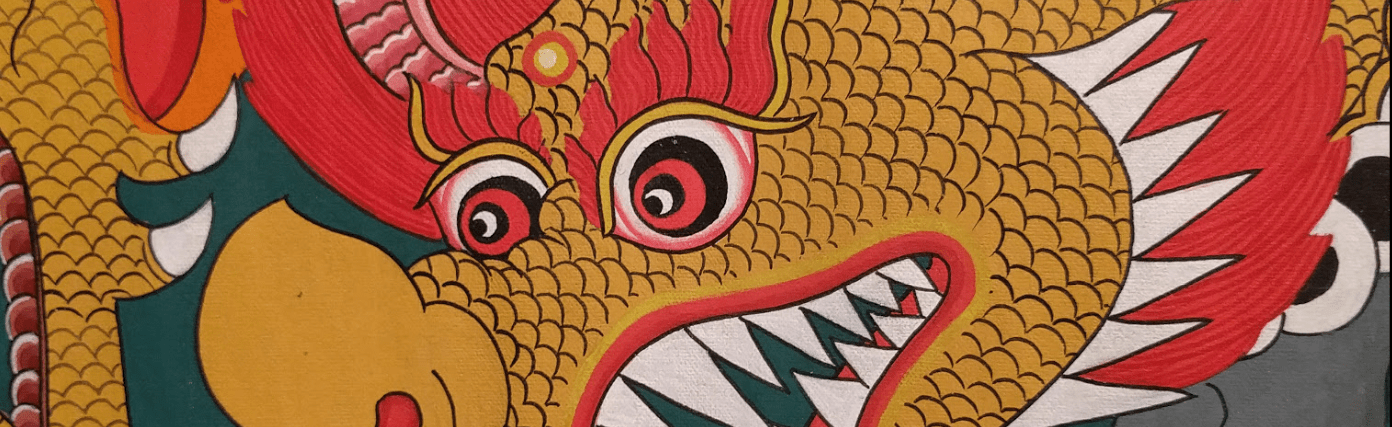
My Lord Has Many Faces

I speak from this space
Where my Lord has many faces. 
I speak from this space
Where silence is divine, 
The quiet of a garden before dawn. 

The trees and gardeners
Bear joy,
Though the tomb is solid rock. 
The depth of stillness 
Is a space between two: 
Space to breath in one’s soul,
Anima and animus as one. 

A tree may grow between, 
But my Lord has many faces;
From my Lord flows the silence I speak.

Is It Orwellian Or Just British Food?

Here’s a secret: I love to Google unprepossessing foods. I do it frequently enough that it counts as a bona fide hobby. Recent search box stars include Celery, Grits, Cauliflower, and Beans on Toast; you would be correct to speculate that I find this hobby most engaging right before mealtimes.

There is a dark side to my little obsession. Such relentless pursuit of knowledge comes at a price. For example: today I learned there is such a thing as a Crisp Sandwich. This is not a sandwich on crisp bread, or even a sandwich with a crispy fried filling; this is a British affair, which follows the linguistic algebra of “crisp = chip.” That’s right, comrades. This is a Chip Sandwich we’re talking about. Some bright spark decided to put potato chips between two slices of bread and call it delicious. I’m still trying to decide if “bright spark” means “person with a brilliant response to desperate times” or “person with a disastrous disregard for taste, self respect, and the health of nations.” 

This new intelligence does not exactly upend the traditional reputation of the sceptered isle’s food. British Cuisine is widely held to be an oxymoron. However, I am not unfair. Rather than unthinkingly accept the consensus of the international community and the evidence of my own eyes1, let us consider a staunch voice for the Opposition in the form of George Orwell’s 1945 essay, “In Defence of British Cooking.” 

Mr. Orwell begins by noting:

“…there is a whole host of delicacies which it is quite impossible to obtain outside the English-speaking countries.”

Perhaps with good reason? But the arguments are convincing enough: he name-checks kippers and Yorkshire pudding before going on to mention “Christmas pudding, treacle tart and apple dumplings.” The next two paragraphs concern themselves with the joys of the English way with potatoes and sauces, respectively. I feel a twinge of regret; I have been hasty in my bias. I shall concede Britain its Crisp Sandwiches, an anomaly in the midst of this generous still life of puddings, potatoes and cranberry sauce2

Ah, the eighth paragraph, Lucky Number Eight. Orwell continues:

“Outside these islands I have never seen a haggis, except one that came out of a tin…” 

My dear sir, the beautiful thing about haggis in a tin3 is that it needs never to emerge from that tin. Please put it back immediately. Cover it with a kilt in a show of decency, and step away as if in mourning for good taste. Furthermore – aren’t haggises (haggi?) Scottish? 

Clearly, by 1945 Mr. Orwell was losing both his sense of taste and his observational prowess. Or perhaps this essay was an intentional illustration of the seductive power of doublethink.

Bereft of Orwell’s guidance, old habits return. I open Wikipedia and search for British Cuisine. The article contains a list, by date of introduction to Britain, of various non-native foods which have nonetheless played a role in the island’s quintessential foodstuffs. The list begins with “bread 4 .” Presumably, since crisps had yet to be introduced, this was used for early Bread Sandwiches consisting of bread between … wait for it… more bread. The last item on the list? Sliced bread. At this point, British cuisine comes full circle, bread to bread and dust to dust. You see, sliced bread is the foundation of what I now can vouch is the most memorable of British culinary contributions: the Crisp Sandwich. 


1 With no censoring whatsoever, the Guardian article in question actually contains a full-color picture of a Crisp Sandwich. I can’t tell if these pains in my chest are from shock at such shamelessly graphic food obscenity, or the meta-caloric load of looking at a sandwich made of potato chips.

2 Pronounced in the manner of John Lennon at the end of Strawberry Fields Forever: “Croooown – berrrrrryyyyyyyy – sowwwce.”

3 But really – in a tin?! Where was he visiting “outside of these islands,” Hell?!?

4 The same list also includes “dog”. Just saying.

Lights of the Deep

This solitude, this solace, this depth of stillness sparse
And barren. 
No! an ocean: beneath waves
And breath of wind,
Sea breeze constant as time and current.

I wait. Stand, float and swim, climb (rise) and fall.

Around me, lights of the deep,
An echo back to distant star: 
An echo to warm Earth’s core. 
This blue of calm 
and thought of change: as tides shift,

So bring me to your shore.


Seek The Desert

Seek the desert

The space where stars walk lightly,
And wheeling birds frame an infinite sky –
Water cradles in a rocky basin
And water tracks where dreams of water lie.

The space where hearts walk softly,
And dust-born flowers shape a lullaby –
Silence drips like water in a garden,
And blossoms forth the whispered God to life.


When Disaster Strikes – Who Are You?

“My mission in life is not merely to survive, but to thrive: and to do so with some passion, some compassion, some humor, and some style.”

Maya Angelou

Dear friends, 

One day you will meet a stranger. I don’t know when or where, though for many of us I believe now is as likely a time as any. That stranger will hold your life in their hands. Not only will they hold your life, they will hold the lives of those closest and dearest to you. 

That stranger’s identity is bound to one question: when disaster occurs – who are you?


Let me digress for a moment, though I have barely gotten started. 

I work in a grocery store. It is not a glamorous job. I have given up on making any “30 Under 30” lists. But I take that job very seriously, because it offers me countless fractions-of-a-second to shape others’ lives. 

For the past week, the store has been stripped of shelf-stable food and dry goods within hours of opening. It is not a sight for which our first-world economy has prepared us. 

I have helped many individuals over the past few days. Nonetheless, in all of these interactions I have talked with precisely two people. 

The first person does not look at me. Their eyes are on the shelves in front of them, looking at all the empty spots. They may have found half to a quarter of the items on their shopping list, but their attention is on the missing items; their attention is consumed in a feedback loop with their experience of the unknown. They may not hear me when I ask if I can help, and they are very likely more frustrated by, than appreciative of, the offer. Other shoppers avoid their eyes and give them a wide radius.

The second person looks at me just a bit longer than I have come to expect from a customer. They smile, and they mean it; they are completely present in this moment. They may only have half to a quarter of the items on their shopping list, but they say they will experiment with what they have. They are more focused on the shared experience of a community of humans facing the unknown. Whether or not they need help, they thank me and others as they move through the store. 


Most of us know ourselves well enough to get through a typical day. We know how it feels to live in our heads, our familiar routines and choices. 

But many of us have never had to face an exceptional day. These are the days which, by definition, we do not know how to get through. There is no template, no previous experience to rely on to guide our decisions or reactions. 

Exceptional days are not anomalies. They are a normal part of the experience of being a human. They are a slight twist on the familiar question we debate each day with the Universe: “What can I make out of this?”

Related: See Trickster’s Bouquet for thoughts on creativity as resilience.

Exceptional days occur infrequently, and because of this we may be unfamiliar with the version of ourselves who emerges in response. It is very likely that this person will be a stranger to our normal mode of thought – but that person holds our future. And fortunately we can give that stranger gifts towards our survival. Like caches of water in a desert, we can leave them compassion, humor, and courage. We can bequeath them the strength that comes from saying, disaster is part of the question of how to be human. 

You see, you get to pick your stranger from my two grocery store varieties. You may find yourself in the hands of someone who sees empty shelves and no help in sight. Or you may find yourself in the hands of someone who has come to understand that empty shelves hold room for quite a lot of kindness, empathy, and the clear-sighted intelligence which says, today is a good day for discovery. 

Today, pick your stranger. Pick the tools you want them to use in the midst of an exceptional day. On the day you face your stranger, you will know you are in good hands.

Best,

Marushka

Early March Mornings

Morning green, forest green
Air condition hum. 
The heat of summer sunrise –
Early March has come
In Texas. 


(Narrated to the sound of iced tea, iced showers, and soaring electrical bills)


Friday 13

What is Friday 13?
They all have different answers:
Filmmakers and actors,
And all the black cats.

It’s a reason to notice the day,
An excuse to look behind you:
See every shadow
And feel breath and skin.

It’s the luck of life crossing your path.

Fed-Up Writer To A Stubborn Piece of Work

Think and don’t think
My contrary child. 
My shadow, my sun, my rage 
and my thorn in the side. 

What do you want today? 

To feel, and float on feeling, 
Think with the edge of a knife.
To see stories and speak stars
Speak truth and spin attraction.

I see you sitting on the page, 
I see you sitting on my shoulder. 
I see you waiting to be born, 
And I see you slipping away. 

You didn’t like today. Will you like tomorrow?

All I want is for you to want me, 
To crave towards birth like I crave to be done with you. 


(A dramatic narration to the sound of crumpling paper and flying pencils.)


The Success Narrative of the Kandinsky Hot Pocket Affair

Last night my life changed, and I have a Hot Pocket to thank for it. 

The experience itself was deceptively mundane. I was at the second of my two jobs; I paused for dinner. I should clarify that I do not often eat Hot Pockets, but this particular one was an unexpected dinnertime gift. 

The first three bites were unremarkable: cheese, red sauce, warm bland crust. It was the fourth bite that caught me unawares. As my teeth separated the bite from the Pocket, I realized that in that bite – in my mouth – was something perfectly, inexplicably spherical. 

For a moment my thoughts went no further than sheer surprise. The sphere had no apparent taste or texture – the only sensation was that of shape, a perfect roundness of a type alien to food. Then – was this a grape? Perhaps a very small tomato? My mind was left adrift. Those were the most obvious edibles I could recall with such a shape and size. But there was no sugared burst of a grape, no caramelized gush of a roasted cherry tomato. There was – nothing. Just a spheroid in my mouth, and a dawning sense that my understanding of reality was a touch more tenuous than previously realized.


Fortunately, I recently read an article in which this very experience was perfectly described. 

Picture the scene: Moscow, Russia, the year 1896. A gallery hosts an exhibition. A man strolls through, a successful lawyer by profession. The man is named Wassily Kandinsky. 

Mr. Kandinsky pauses in front of a painting. It appears to be one of Claude Monet’s Haystacks series. His expression undergoes several rapid changes. He reaches for the gallery catalog. He stares at the catalog; he stares at the painting. He stares back at the catalog. In his own words:

That it was a haystack the catalogue informed me. I could not recognise it. This non-recognition was painful to me. I considered that the painter had no right to paint indistinctly. I dully felt that the object of the painting was missing….

Let us consider Mr. Kandinsky’s “non-recognition.” This is the instant of tabula rasa – the instant right before a brain is changed. It is the familiar out of context, the unknown within reach; it’s meeting your double and losing your shadow. The discomfort hits as your brain starts to process some sort of meaning you can plausibly tell yourself and your neighbors. It is the classic snowball-to-the-face reaction. You are bemused, astonished, frustrated, outraged, caught off guard. In simple English: you are surprised. 

This surprise is the mark of potential. This is a moment that can change your brain and reshape your life. Since it can hit you like a shot of adrenaline or a natural disaster, discomfort is only natural. Discomfort simply means change. Neuroplasticity is occurring. 

What does Kandinsky think of neuroplasticity? He continues:

“…And I noticed with surprise and confusion that the picture not only gripped me, but impressed itself ineradicably on my memory. Painting took on a fairy-tale power and spendor.” 

As Tank says in The Matrix: “Hey Mikey, I think he likes it!” 1 


From shock to “give me more” – creation work2  requires this rapid recognition of the creative potential of surprise. 

Creation work – such as Kandinsky’s – maps out how little we know. Kandinsky routinely questioned everything. He questioned his career as a lawyer, and became an artist. He questioned what an “artist” did, and pioneered abstract art. People who create things – whether paintings or stem cell research or perfectly fluffy pancakes – know it’s a balancing act. You have to have perfect confidence, and you have to have perfect doubt. You never know it will turn out, until it does. 

This is a largely untold story. In its place, we have a social narrative about knowledge and creativity that is – allegedly, inexorably – linked to success. But that’s an artificial connection. 

This artificial narrative tells us there is a predetermined arc from creation to success. If this arc includes mistakes or surprises or detours, it does so only to count these as further evidence of the inevitability of the creator’s success. It’s the myth of the “fail better” cult.  

It’s hard to spin a motivational narrative about the shock and discomfort and horrendously gnawing doubt that is crucial to making anything of worth. So the narrative doesn’t try. In its place, we have The Myth of the Successful Fill-in-the-Blank. It goes like this:

This artist/scientist/writer/entrepreneur is a success, because they were destined for success. 

Therefore, they are an artist/scientist/etc. because, and only because, they are a success. 

Did you catch that? It’s a subtle flip. It’s easy to do. And it’s an easy story to tell and sell. The artists/scientists/etc. in question frequently tell it themselves. This may be because they understand a good story when they hear it, or it may be because it’s simpler to believe that once things achieve a comfortable status quo, they have always been destined to achieve that status quo3

Here’s the damaging part. The corollary is: if you aren’t a success, you aren’t an artist/scientist/writer/what-have-you. 

Why? Experimentation and mistakes aren’t worth money. They aren’t sexy, they aren’t inspirational. They’re just drudgery. But they are essential for anyone to make a glimpse of a different world – even if they’re the only person who ever sees it. 

I speak only for myself: I crave honesty. I crave to know that my failures aren’t unique, and I don’t have to “fail better”. I just have to pick up the pieces, each and every time. I just have to keep wrestling with the ideas in my head – and understand I don’t always get to know if those ideas affect anyone else at all. 

As I reject the “success” narrative, surprise becomes my ally in the struggle through disillusionment and failure. Surprise – and subsequent wonder at the unknown – gives me the courage to look for those moments that make me disoriented, uncomfortable; to look for those moments where gravity pulls me towards the ceiling instead of the floor. I observe them, remember them, pick them up and take them apart, spread them out on the table and imagine what makes them tick. For today, that’s success enough. Tomorrow, I’m looking for Kandinsy’s “fairy-tale power and splendor.”


Oh, and in case you were still wondering about the mysterious sphere – I checked the package. It was a meatball. 


1 Matrix aside, this experience was powerful enough that Kandinsky subsequently quit law and took up art. He became widely known as a painter, art theorist, and pioneer of abstract art, though he would always insist his art was “still deeply ingrained in reality.”

2 Creation work? Yes, it sounds (pick one) either overly pretentious or a euphemism for something slightly more messy than sex work. It’s my pet term to describe anyone who knocks out the walls and floorboards of existing knowledge. I refuse to give in to the false dichotomy between The Arts and STEM – but that’s another post.

3 When the subject is geopolitics instead of creativity, this is also called the “end of history” argument: I like this government, therefore this is the government we were always destined to have.