In The End –

In the end,
It was backwards all along. 
Start where paths have led;
Start where conclusion lives, 
The firm and foregone FIN. 

Work towards questions, seed of Unknown;
Work towards the point before the stage,
Before – that, too. 

Leave the firm. 

On the waters, the rocking waves,
Be a net, cast
In a lake’s outwards expanse 
Where silver fish
Swim freely
Through
The
Gaps.

Art of Not-Looking

I like nothing so much
As that for which I’m not looking. 

The lurking, the stealth, the quiet and the rush,
The thing that says, look away please.
You saw nothing. 

Of course I saw nothing – I remembered everything. 
We’ll pretend this dance, 
We’ll relish this fiction:
I knew what we were doing the whole time. 

And when the scenery folds, 
And the truth it holds –
We’ll just go not-looking for tomorrow’s line.


Time of Small Things

They’re everywhere. No, it’s not a horror story – just an observation. I mean the Small Things; the cracks in the day, the glimpses of joy or grief out beyond the stories we tell ourselves. 

My childhood was spent in a house approaching the century mark. I promise you again, this isn’t a horror story. We’re only stepping into the closet; come on, back here. Behind all the clothes. Yes, you have to come into the closet to see it – what are you looking at me like that for? There’s almost certainly no skeletons – ah. Here it is. They painted this house quite a few times, but they could never quite cover it. 

It’s one of the Small Things. The layers of paint have cracked away just enough, giving up a revelation: a sliver of wallpaper, decades old and covered in flowers. I often forget it’s here. But it’s one of those invisible pushpins on my mental map of the worlds I move through. As long as it’s here, a piece of this world is still in place. If it should ever be covered again, or remodeled over – the memory will remain, a fragment snapped free from form, but still a sort of marker on a place in time. 

The Small Things ring our lives. They mark out the boundaries, the edges, the familiar and uncertain; they form a sort of exoskeleton. No one has the same Small Things, but their essence is perfectly exemplified in the children’s book Madeline: 

“…a crack on the ceiling had the habit
Of sometimes looking like a rabbit.”

Madeline, by Ludwig Bemelmans

The cracks on the ceiling, or a particular chip on a particular cup; the feeling and pattern of linoleum kitchen tiles, the creak of a door, the smell of a tea tin, a clock ticking. These things barely impinge on our conscious mind. They are almost invisible. And yet, they form a baseline. They give us a world we can trust; a very small world, but the larger world of shared experience isn’t big enough for more. Sometimes it’s just enough to have one thing on which you can depend. 

Most people like to think their lives are built on values. It’s a lovely idea. But large-scale concepts like Trust, Hope, Love, and Courage don’t have meaning unless you actually, well, value them. And things are easier to value when they have tangible form. 

Patience is easier to grasp when a well-known clock ticks off the seconds. A chipped teacup holds acceptance of imperfection; a tea tin holds the gift of sharing. The creak of a particular door is a nudge towards openness, the ability to reach out; a crack on the ceiling shapes an understanding of empathy, other minds, other perspectives. 

Like I said, Small Things mark the edges of our lives. Values may dwell out beyond the boundaries, in the magical realm of intangibility; most of our lives occur on the other side of the divide, where matter fronts for mind. The Small Things are sometimes a comforting routine, and sometimes the closest lifeline to sanity and the better parts of our nature. 

While you have time – if you have time right now – take a few moments to look and listen for them. No matter what state of disarray your life is in, I guarantee you will find your Small Things there somewhere, even if only in memory. Conjure them up, hold them as close as you can; imagine them in detail; imagine what they might teach you.  

As they say – it’s the Small Things in life.


Vanishing Point

Expanse like the generous horizon,
Spring of miles and space –
You used to be mountains;
You hid in clouds, thunder of June, 
Stretch of wintertime frost. 

In the flame of an evening alone, 
Bright and dark my companions. 
The shadows changed, edges unfinished – 
Stretched to morning; stretched towards sun,
Growth of a tree with no trunk.

You pick your form, you shape my sight,
Thief of my eyes in retreat. 
Creature of depth – 
As you give, give my eyes
Perspective.

When Life Gives You Melons

This may come as a surprise to you: I dislike surprises. 

The idea of surprise is interesting, useful, helpful – even essential – to explore. I will, cautiously and with enough advance notice, make exceptions for well-defined surprises on my birthday, Christmas, and Valentine’s Day. But actual surprises – the undomesticated variant, in their natural habitat – are not my cup of tea. I try to avoid them as much as possible.

This morning I got a surprise. I thought I was getting a melon. Due to the early hour, I confused the two. 

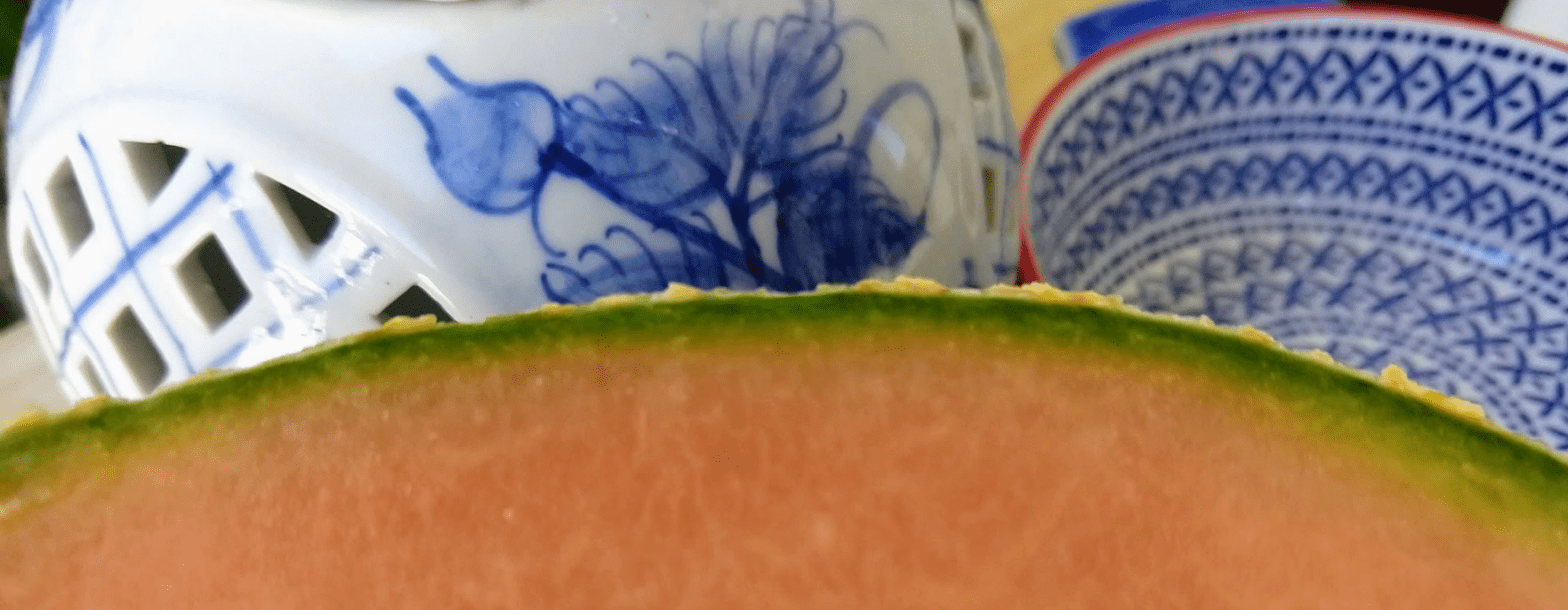
The (apparent) melon was a beautiful specimen. Mottled green and dust-colored skin, no bruises or soft spots – so far so good. When I sliced into it I stopped to admire the sight. The melon’s insides were a rich salmon-pink-orange, flickers of yellow and deep green around the edges of the cut. The smell was delicious. 

I grabbed a spoon to scoop out bite-sized chunks. The spoon bounced off the inside of the melon. 

I stared. The melon stared back. I tried again; same results. The melon was as hard as an apple. 

Apple-textured apples are wonderful. Apple-textured melons are a situation I am not prepared to face. 

There was a bit of a skirmish. Tupperware, forks, and multiple knives were involved. Currently things have stabilized into a standoff: half the melon is sulking in the fridge, half the melon is safely in a container, and I’ve retreated to the balcony to sulk in retaliation for the melon’s sulking. I retain my position: melons should not go “crunch.” 

Melons should melt, drip, overflow, and generally make as much of a sticky summertime splash zone as possible. 

In this time of paper towel shortage – at least this melon won’t make a mess. There may be a silver lining after all. 

What a surprise.


A Chance of Ten Times the Experience

“Ooof… I guess I should have brought food for the wolves…As soon as I make it to the village I’ll be safe.”

“What?!? This area’s not safe??”

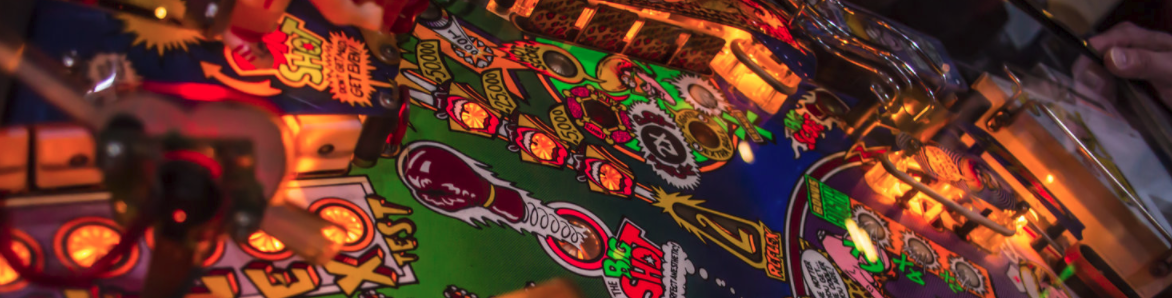
(Quotes overheard, courtesy of Old School RuneScape’s Deadman Mode – a special mode in which other players can kill you anywhere, but you get a chance at ten times the normal rate of experience gain) 

No one said gaining experience was easy. 

In video games, they have a nice tidy leveling-up system. Usually it’s exponential – the first time you need x points, the next level you need x^(something) points, and so on. It’s a source of endless stress and focus and effort and (sometimes) rage and determination. 

But you know exactly where you stand, with experience. You get a number and everything. 

Clearly, life is lacking in this regard. How much experience am I going to gain from this whole pandemic thing? Do I gain more or less experience for sheltering in place? Do I have to actually contract the virus in order to face the final boss? Where are all my health potions? 

Is the experience different for those using Xbox? 

They really didn’t think this through. 


Of course, they tell me life isn’t a video game. Apparently it’s actually a stage, or something – I’m a bit hazy on the details. 

But – dear Lord – after this, can you imagine how much experience the next level will require?


Image courtesy of ihavekungfuphotography.com.

Remembering Resilience

Today – quarantine notwithstanding – you have a guest. Your guest is a very familiar stranger, and they have a very important matter to discuss. They sit down and accept their coffee fixed exactly the way you take it. They don’t bother with small talk. They lean forward, look you straight in the eyes, and say – “What do you have for me?” 


Let’s change the viewpoint: What do I have for you? Nothing, everything – something between the two. I have memories; I know that’s what you’re after. But I am not going to give you everything – no, I am going to give you the best. I have carefully picked what to remember from this period of time, this pandemic. There is a theme underlying each of these selected memories. It is called “resilience”. 


There is a story called resilience, “…the process of adapting well in the face of adversity.” The psychologists tell it, and they say it can be learned. They say it must be practiced, like any other skill. 


What does it feel like to practice resilience? 

It isn’t delusion. It doesn’t dull the pain or hide away. Rather, it says: “I won’t surrender life lightly – mine, or yours. We will make a Tomorrow – but first, we’ll face Today.” 


This pandemic has had a lot of Todays, so many that they all run together. I remember I didn’t face some of those Todays in a way of which I am proud. Those, particularly, I must not forget. Out of them I craft the memory of Learning. 


I remember working in a grocery store, shelves stripped bare. I remember anxiety under a facemask, breathing short and trapped. I remember fighting not to go home before the end of my shift. I remember every single minute of an eight-hour day.  I remember how people changed, the fight-or-flight reaction laid bare before my eyes, and I remember feeling myself change, too, becoming reclusive, angry, frustrated. 

I remember the rage and meanness sparked by learning my fellow citizens valued their entitlement and fairytale economy over my life. 

I remember weaknesses and stress points, a map of the ways in which I crumble. 


The psychologists say that resilience is not a fixed state. It arises as an interaction between us and the environments – physical and mental – that we inhabit. 


I remember a sudden gift of time. After three years of two jobs, four days off every week seems a miracle of shelter-in-place. 


I remember small things, experienced richly. I remember hummingbirds and sunshine, coffee and peach tea. Once there was a hibiscus blossom on the balcony at 3 a.m. on Easter morning.


I remember writing. I remember trying to craft different stories of survival, different paths towards strength and wisdom and healing in times of crippling helplessness. Change; normal; miracle; apocalypse; utopia – each of these concepts have something to offer us. In times of systemic stress, their meanings are rich templates of understanding that can be layered over the world around us, creating depth and shaping growth.


Growth. It’s an understanding shaped by the springtime outside my window, the peace of going home and the panic of going back out to work. Somewhere between the two, I understand that this is what growth feels like. 

Growth lives between terror and the everyday, or where terror picks apart and remakes the everyday. I know the stories, the history. I know the present. I know “growth” isn’t a guarantee of survival. 

But growth is a lifeline to the possibility of a future you. It’s the tether of a story, consciously crafted; the story of what you choose to remember, what you choose to learn, from catastrophe.

Make no mistake – catastrophe will shape you. There is no question, no exercise that offers control over that. 

What you must determine for yourself is how, exactly, you are shaped. That decision is best made early. If you decide right now that you will view each setback as a circumstance shaping you towards a more resourceful, empathetic, caring person – the chances that you will instead succumb to bitterness are reduced. 


UC Berkeley’s Greater Good Science Center – and its affiliate Greater Good In Action – offers these science-based practices for building resilience. I have found them useful, and hope you do too.


Of course, I’m making this up as I go along. All I have are experiences and memories, a few articles on the Internet. It’s a tenuous excuse for hope. It’s a tenuous thing to hand over to my future self, that imaginary being who comes calling for coffee and keeps me on track. 

She’s been stopping by a lot more frequently since quarantine started. She knows her life depends on the choices I make today, the memories I craft and keep. With her in mind, I try to acknowledge the panic and frustration, rage and restlessness, and use them as catalysts for learning and growth. 

So when she asks, “What do you have for me?” – I can answer, a resilient future.


Porch Swing Time

When was the last time you sat on an old-fashioned porch swing? It’s not something anyone forgets. The swing must be the right kind, made of thin wooden slats. If ever painted, the paint must have flaked off to the point where the wood’s present color is most accurately described as “lichen.” 

The swing must be suspended from chain, coupled to metal hooks screwed into the porch’s wooden ceiling. Both hooks and chain must have matching coats of rust. Extra length of chain must dangle down past the hooks so that it smacks against its tensioned, load-bearing better half, just off beat with each back-and-forth rock of the swing. 

Overlaid against this jangled smack is a dull creak of rust against rust, each chain link contributing its own tone to the whole. The sum is greater than its parts; there is no other sound on Earth that resembles an old porch swing in motion. There is no other sound quite as soothing for an afternoon nap. 

And because it’s a place heaven-made for napping, the swing must be covered in a quilt. The quilt will be ragged but clean; it has been selected from the “good” indoor quilts for this holiest of holies, the highest fulfillment of an elderly quilt’s days, covering the swing. This quilt is your protection against splinters and (remaining) sharp flakes of paint. It must be soft. There’s a special softness that cotton takes on after the colors have faded and the cloth has spent several decades in use and washing machines. That is the sort of softness you want your porch swing quilt to have. 

The quilt should be pink, yellow, or (rarely) white; soft shades of green are sometimes acceptable too. The pink copes the best with the inevitable Kool-aid stains. No other color blends so well with every flavor from Grape to Strawberry Raspberry Fructose Burst. Pink will also embrace watermelon drippings, popsicle melt, and ice cream runoff; looking ahead to the Fall, it will sometimes manage chili, although that is considered pushing your luck. 

The front porch swing is the Special Spot. If you look around a gathering, there are three groups who sit on front porch swings in company: the Older Folks, the New Mother, and the Little Kids. Not at the same time, of course – there is only so much forgiveness to go around in the face of sure disaster. 

Usually it starts out with the Little Kids, early in the evening. The New Mother will come next, after small bodies and enthusiastic swing rocking has been chased off the porch. A few Older Folks will gravitate over to the New Mother, and (if there’s room) the most senior may take their place on the swing beside her. When she leaves to “take care of” Little So-&-So1, the next senior takes her spot, and so it goes2

But porch swings are best, in my opinion, when there’s no one else around. There’s a special loneliness to a Midwestern summer afternoon. The streets and yards are empty. The birds have given up. The cicadas pursue their own noisy ends, competing with the hum of air conditioners. The shadows are harsh, the light blistering. And if you are outside, it feels entirely possible that you are the last human on the planet. 

But you are the last human on a planet with a porch swing, finally, to yourself. 

The smack of the chains and the creak of wood, the smell of sun-roasted cotton quilt. Everything is faded and a little out of place in time. You could be in the 1920s, the ‘50s, the ‘90s: when humanity meets the first time traveler, they will have just woken, confused, from a high summer nap on a porch swing somewhere in the Midwest. 

If the future is smart, it will ignore the time traveler and look at the porch swing. 

They will see an unfamiliar, unlovely object. The wood is worn and spintered, the chains are a tetanus hazard, the quilt is unsanitary and covered in blotches of red, brown and whatever color Strawberry Raspberry Fructose Burst dries into3

The smaller children will be the first to investigate. They’ll all pile on in a heap and rock the swing as far as it will go, to the sound of straining chains and their parents’ caution. After this trial by fire, the swing will be deemed safe. The new mothers and elders will carefully, gradually, test it. 

Very late at night, after most everyone has gone home, there may be young couples and teenagers who use the swing – but no one will know anything the next morning. Plausible deniability is a wonderful thing. 

And in the late afternoon, when everyone really has disappeared, a lone child will sit rocking, half asleep, back and forth. There will be a hum; perhaps cicadas, perhaps air conditioners. 

The shadows will stretch, and the light will stay the same; the light will fade, and the shadows will remain. The years will rock back, and forth, back, and forth, a midsummer lullaby. 

Some sort of pendulum has set this motion, this archetype Foucault always caught between pegs. Some sort of time passes on an old-fashioned porch swing, but it’s the same time every time. It’s the time between Someday and Yesterday. The time of naps, loneliness, and cicadas, the only time measured on a Midwestern summer afternoon. Someday it might change; Someday always marks the time of change. 

Someday, in the very distant future – even the stains from the Strawberry Raspberry Fructose Burst might fade.

But not as long as there’s an old-fashioned porch swing around. 


1 No I don’t know the baby’s name, I’m just here for the porch swing, alright?

2 Very much later on, after the company has really cleared out, a fourth group consisting of young couples and teenagers may use the porch swing for their own nefarious purposes – but I’ve been advised it’s better to leave well enough alone. Plausible deniability is a wonderful thing.

3 I’ve never actually seen a dried stain from any flavor with more than two fruits in the name. They just seem to turn into a progressively stickier gel, a sort of La Brea Tar Pit of fruit flies and mosquitoes.

The Great Wall of Text

If I can say less – why fight it?
Brevity is the soul of wit.
If someone else didn’t say it,
They may be smarter than I.


There’s an eighth wonder of the world out there. I’m not going to claim you can see it from space; it’s far more intimidating up close, in your inbox, mailbox, or browser. Every year it is visited by thousands of unwitting, unhappy pilgrims, and thousands more actually help build it. It is, in fact, the only Wonder of The World which has been under continuous construction since the advent of the written word. 

My friends, please consider The Great Wall of Text. It’s a legendary, awesomely impenetrable barrier of words blocking out light, sound, and your plans for the rest of the week. It’s a “Wonder” because it makes you wonder… what you’re doing with your life, and whether there’s anything really important buried in all that unwanted prose. It triggers an immediate “Look – A Distraction!” response. 

I should know about the suffering inflicted by the Great Wall of Text. I frequently build additions to it. Email, comments, posts… all written materials are suitable for the task. It pains me to admit that about half of my written “Great Wall of Text – Under Construction” projects see the light of day. But I’m learning from the ones I catch. For my sins, here are three helpful subtleties to consider when editing your own work.

  • Do I actively avoid re-reading my own words? This is a major red flag. Writers are egotists. We of all people should love to read our own words, like Narcissus with his reflection. If we don’t want to re-read it, we probably shouldn’t – and neither should anyone else. 
  • Do I wait to unleash the Big Idea? If I’m not riding the Big Idea from the first paragraph, rodeo-style, life and the lesson may be too tame – or too long. (As in, life is too short to hack through what should have been fed to the delete key.)
  • Can I remember Points A and B by the time I reach Point X? How many Big Ideas do you think one piece of writing can hold? Are you trying to set them against each other cage-match style, or re-make another Godzilla vs. Kong?

In closing, always remember one of the most eloquent responses in the English language is but a single letter: “ ‘K.”


Dissatisfaction: A User’s Guide

Good morning friends – today my post on dissatisfaction appears over on Pointless Overthinking. Take a peek and share your thoughts!

Best,

Marushka